Video
Video

What is a Torque Wrench?
_.png)
Understanding Torque Wrenches: Key Insights, Applications, and Maintenance Tips
In modern industrial environments, precision in fastening is critical. Torque wrenches play a vital role in ensuring bolted connections achieve the correct preload, preventing mechanical failures caused by over-tightening or under-tightening. They are widely applied in automotive repair, aerospace, energy, and industrial manufacturing. This article provides a detailed overview of torque wrenches, including their principles, types, applications, and best practices for maintenance, along with industry trends and practical insights for purchasing decisions.
What is a Torque Wrench?
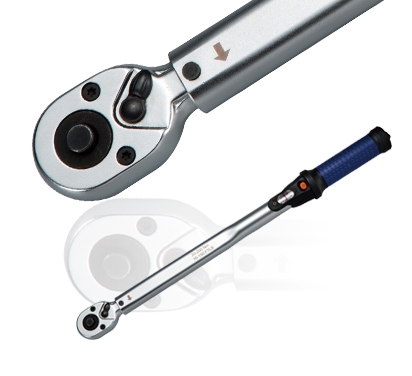
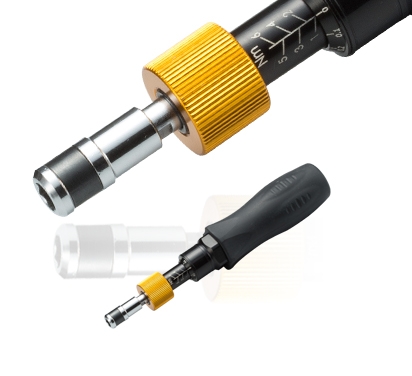
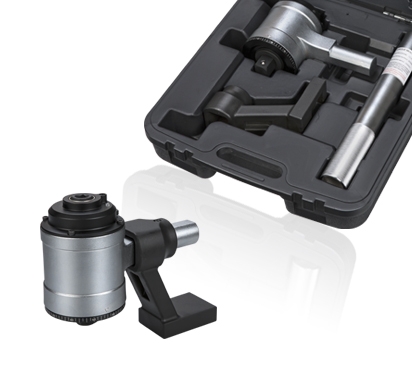
A torque wrench is a precision tool designed to accurately apply or measure torque on fasteners such as bolts and nuts. By ensuring correct preload, it prevents damage to mechanical components and improves assembly reliability. The importance of torque control is growing globally, as industrial machinery, automotive systems, and aerospace components demand consistent performance. (market.us – High Torque Tools Market)
Working Principle
Torque wrenches operate by providing visual, auditory, or tactile feedback once the applied torque reaches a preset value. Their core operating principles include:
- Utilizing the linear relationship between elastic deformation (spring or torsion bar) and applied torque.
- Measuring deformation or torque mechanically or electronically.
- Triggering a release mechanism or displaying readings when the preset value is reached.
Types of Torque Wrenches
- By Measurement Principle
- Mechanical Torque Wrenches
- Spring-loaded (most common in industrial use)
- Deflecting beam type
- Dial indicator type
- Electronic Torque Wrenches
- Digital display type
- With data logging capability
- Programmable smart type
- Mechanical Torque Wrenches
- By Trigger Mechanism
- Click-Type: Produces an audible “click” and handle movement when reaching the set value. Most common type in industrial applications.
- Beam-Type: Reads torque directly via a pointer and scale. Simple structure, no calibration required.
- Digital-Type: LCD/LED display shows real-time torque, multiple unit settings, and alarms.
- Slip-Type: Internal mechanism slips when preset torque is reached.
- By Direction of Use
- One-Directional: Measures clockwise torque only.
- Bi-Directional: Measures both clockwise and counterclockwise torque.
- By Accuracy Class
- Industrial Grade: ±4%
- Precision Grade: ±2–3%
- Laboratory Grade: ±1%
Applications
Torque wrenches are essential in:
- Automotive repair (tires, engines, and critical components)
- Aerospace (aircraft structural assembly)
- Industrial manufacturing (machine and equipment assembly)
- Construction engineering (steel structure connections)
- Bicycle and motorcycle maintenance
Usage Precautions
- Adjust the scale to the minimum value after each use.
- Do not use as a conventional wrench.
- Regularly check its function, typically every 5,000 cycles or annually.
- Keep the tool clean and avoid drops or impacts.
- Store in a dedicated protective case after use.
Key Purchasing Considerations
|
Consideration |
Recommended Approach |
|
Torque Range |
Use within 20–80% of the tool’s capacity for accuracy and durability |
|
Accuracy Requirement |
Choose industrial, precision, or laboratory grade based on assembly criticality |
|
Drive Size |
Common sizes: 1/4", 3/8", 1/2", 3/4", 1" |
|
Special Requirements |
Consider waterproof, explosion-proof, or programmable features for specific tasks |
|
Budget |
Balance between feature set, brand reliability, and frequency of use |
Frequently Asked Questions (FAQ)
Q1: How often should a torque wrench be calibrated?
A: Typically every 5,000 cycles or annually. High-use or critical applications may require more frequent calibration.
Q2: Can a torque wrench be used as a standard wrench?
A: No, misuse can damage the internal calibration and reduce accuracy.
Q3: What is the best storage practice?
A: Store in a protective case with scale at minimum value, avoiding extreme temperature or moisture.
Q4: Which type of torque wrench is most suitable for industrial applications?
A: Click-type and digital-type wrenches are most common in industrial assembly due to their accuracy and repeatability.
Conclusion
Torque wrenches are indispensable precision instruments that ensure safety, quality, and longevity of mechanical assemblies. Proper understanding of their types, applications, and maintenance practices maximizes accuracy and extends service life. For inquiries, service, or guidance, contact Torque-Tech Precision Co., Ltd today!
For professional-grade Manual Torque Wrenches, visit our visit Below