Video
Video

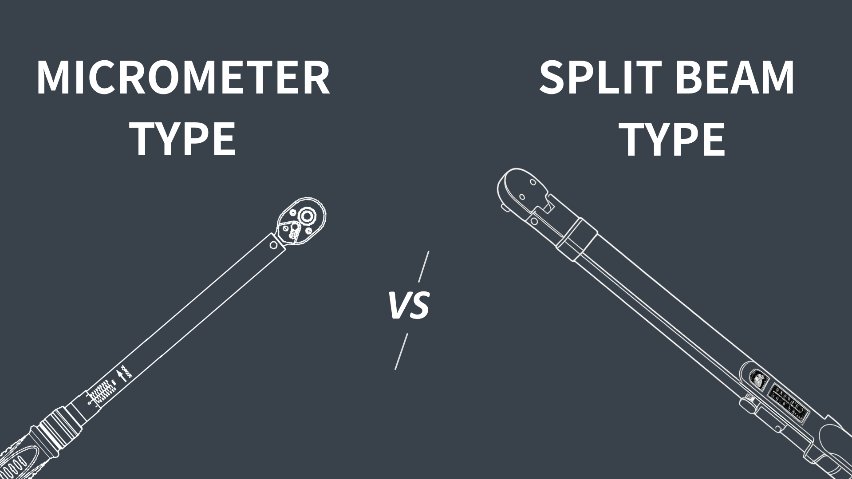
Industrial Torque Wrench Durability: Split Beam vs. Micrometer Design
For industrial buyers, a torque wrench is more than a tool for reaching a target value. It is part of a fastening-control system that affects joint quality, maintenance efficiency, calibration planning, operator consistency, and total cost of ownership.
When comparing a split beam torque wrench with a micrometer torque wrench, the real question is not which style is universally better. The more useful question is: which design is better suited to our actual working conditions?
At Torque-Tech, we recommend evaluating the answer through the realities of industrial work: frequent use, changing shifts, multiple operators, oil-contaminated hands, limited-access fasteners, mobile service, and varying levels of tool-care discipline.
Quick Answer: Which Design Is Better for Industrial Durability?
A split beam torque wrench is often the stronger choice for high-use industrial environments where tools are frequently shared, transported, or stored by different operators. Its non-coil-spring mechanism removes the need to return the setting to the lowest torque value after every use. This helps reduce one common storage-related risk found in spring-based adjustable tools.
A micrometer torque wrench remains a practical choice when the application requires a familiar micrometer setting method and the organisation has reliable procedures for storage, handling, calibration, and traceability.
The best choice depends on whether the buyer’s largest risk is mechanical wear, setting error, poor storage habits, limited operator training, or insufficient calibration control.
Why the Internal Structure Matters
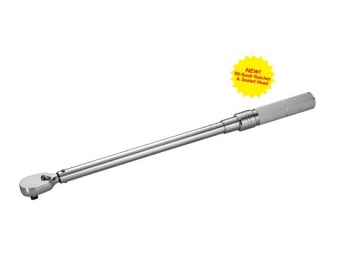
In common micrometer-adjustable click torque wrenches, the torque setting is changed by rotating the handle and altering the preload on an internal compression spring. The scale is familiar and can provide precise setting control, but the tool should normally be returned to its lowest marked setting before storage. Leaving a spring-loaded wrench at a high torque setting for long periods can place unnecessary stress on its internal mechanism.
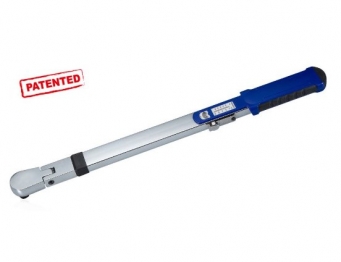
A split beam torque wrench uses a different mechanical principle. Instead of relying on a continuously preloaded coil spring, it uses a beam-based structure to create the torque-release signal. This design is particularly useful when a tool must survive repeated use without relying on every operator to follow an additional reset procedure.
Torque-Tech split-beam models also use a patented toothed hinge cover with a locking function. The locking structure is designed to help prevent the selected torque setting from changing accidentally during work or transport.
Split Beam vs. Micrometer: What Buyers Should Compare
Before selecting either design, buyers should compare more than torque range and price.
| Evaluation Area | Split Beam Torque Wrench | Micrometer Torque Wrench | Buyer Consideration |
| Storage process | Does not require torque reset after use | Usually requires return to the lowest marked setting | Consider how consistently operators follow storage procedures |
| Adjustment method | Knob adjustment with visible window scale | Rotating micrometer scale | Consider adjustment speed and user familiarity |
| Setting security | Torque-Tech toothed hinge cover locks the selected value | Locking method differs by model | Important for mobile, shared, or repetitive work |
| Durability exposure | Reduces dependence on spring-reset discipline | More dependent on correct spring-storage practice | Compare the likely human-error risk |
| Calibration | Requires scheduled verification | Requires scheduled verification | Neither design is maintenance-free |
| Suitable environment | High-use, shared, industrial, and field-service work | Controlled workstations and standardised procedures | Match the design to the workflow |
The table should not be interpreted as a claim that a split beam design eliminates maintenance. Its value is that it removes one avoidable operator-dependent step from the daily routine.
Three Durability Questions Every Buyer Should Ask
-
Will Operators Store the Tool Correctly Every Time?
A micrometer wrench can deliver reliable results when handled correctly. However, proper storage practice includes returning the setting to the minimum marked value before storage.
In a controlled quality environment, this may be easy to manage. In a field-service fleet, a maintenance workshop, or a plant with rotating shifts, the same tool may be used by several people in one day. A split beam torque wrench helps create a more forgiving workflow because its storage condition is less dependent on this specific operator action.
-
Could the Torque Setting Change During Work?
An incorrect torque setting can create under-tightened or over-tightened joints even when the wrench itself is in calibration. Setting security therefore deserves the same attention as accuracy tolerance.
Torque-Tech’s patented toothed hinge cover is intended to secure the selected setting. This is especially relevant where tools are carried between jobs, used around equipment vibration, or repeatedly handled in limited-access locations.
-
Can the Tool Be Maintained and Verified Efficiently?
Industrial durability includes serviceability. A torque wrench that remains mechanically intact but cannot be calibrated, traced, or serviced efficiently may still create operational cost.
Both designs require inspection for damage, contamination, corrosion, worn ratchet components, and signs of misuse. Neither wrench should be used as a breaker bar, struck with a hammer, exposed unnecessarily to corrosive fluids, or dropped without subsequent inspection.
When a Micrometer Torque Wrench May Be the Better Fit
A micrometer torque wrench may remain the best option when the user needs a specific torque range, graduation, head style, or setting format that matches an established work process.
It can be a good choice when:
- The tool is assigned to a fixed workstation.
- Operators are trained to reset and store the tool correctly.
- The company has a documented calibration and tool-control programme.
- The selected model’s scale and range match the required fastening procedure.
- The work environment does not create frequent uncontrolled handovers between users.
In these conditions, a micrometer design can provide familiar handling and dependable results. The decision is not about replacing every micrometer wrench. It is about choosing a split beam design where storage discipline and setting stability are more likely to affect tool lifecycle.
Accuracy and Calibration
Durability and accuracy must be evaluated together. A torque wrench should be selected according to its required range, stated tolerance, direction of use, head configuration, working angle, and calibration interval.
Torque-Tech recommends calibration at least every 12 months or 5,000 cycles for regularly used torque wrenches. For critical fastening operations, organisations may require more frequent verification based on internal quality procedures, safety requirements, or application risk.
FAQ
No. A split beam torque wrench uses a non-coil-spring mechanism, so it does not need to be returned to the lowest torque setting after use.
No. Accuracy depends on the individual model, stated tolerance, operating range, condition, and calibration status. Structure alone does not determine accuracy.
Yes, if the selected model has the correct torque range, drive size, tightening direction, tolerance, and application suitability.
No. A properly used, stored, inspected, and calibrated micrometer torque wrench can deliver a long service life. The difference is that its storage condition is more dependent on operator discipline.
Yes. The design reduces a storage-related risk, but it remains a precision tool that requires scheduled calibration and periodic inspection.
At Torque-Tech, we develop manual torque tools for industrial production, automotive service, renewable-energy applications, and OEM/ODM projects. Our split beam torque wrench range combines a non-coil-spring mechanism, visible torque setting, and locking design for demanding work environments. Our in-house TAF-accredited calibration laboratory, operated under ISO/IEC 17025:2017 accreditation criteria, supports product traceability and torque calibration capability up to 1,500 N.m.
If you are evaluating a torque wrench for high-frequency production, industrial maintenance, field service, or an OEM programme, contact Torque-Tech with your torque range, operating conditions, usage frequency, and calibration requirements.