
 Video
Video

Why Preset Torque Wrenches Are a More Stable Choice for Mass Production
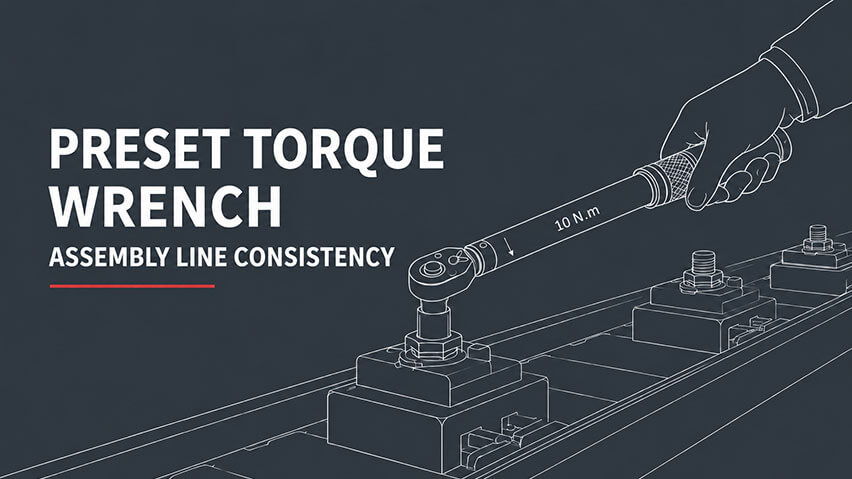
A preset torque wrench is a torque tool set to a specific torque value in advance, helping operators perform repetitive tightening tasks with less risk of incorrect adjustment. In mass production, the costliest problems are not always caused by major equipment failure. More often, they come from small assembly errors that repeat silently across hundreds or thousands of units. Torque control is one of the clearest examples.
If a fastener is under-torqued, it may loosen in use and lead to vibration, leakage, abnormal noise, field failure, or warranty claims. If it is over-torqued, it may damage threads, deform components, or shorten product life. For buyers, plant managers, manufacturing teams, and business owners, this is not just a tooling issue. It is a process-control issue that directly affects production stability, yield, delivery performance, and customer confidence.
That is why, when a production line repeats the same fastening task over and over, a Preset Torque Wrench is often a better choice than a general adjustable tool. The reason is practical: it helps reduce setting errors, lowers operator variation, and makes standardized work easier to maintain. From a poka-yoke point of view, it is not simply a torque tool. It is a fastening solution designed to reduce avoidable risk in mass production.
What Is a Preset Torque Wrench and How Does It Support Mistake-Proofing?
Poka-yoke is the principle of mistake-proofing. Its purpose is to make errors less likely to happen or easier to stop before they become defects. In assembly operations, the best quality control method is not to catch defects at final inspection, but to prevent them during the process.
Fastening is especially suitable for mistake-proofing because torque errors are often frequent, hard to detect immediately, and expensive when repeated at scale. Common situations include:
- a tool setting is changed without being noticed,
- different operators use different tightening habits,
- new workers are not yet stable in torque-related judgment,
- line speed increases while torque consistency drops,
- the issue is only found at final inspection, after rework cost has already increased.
When the same error keeps appearing at the same station, it is no longer a one-time mistake. It becomes a process design weakness. This is exactly why more manufacturers prefer a Preset Torque Wrench in standardized production environments. By fixing the torque value in advance, the tool allows operators to focus on execution instead of repeated setting decisions.
Preset Torque Wrench vs. Adjustable Torque Wrench: Which Is Better for Repetitive Work?
Adjustable torque tools have real advantages in maintenance, repair, and mixed-task applications. However, in a fixed workstation with a fixed specification and a fixed SOP, too much flexibility often means more variation risk.
A Preset Torque Wrench is usually the more logical choice when:
- the same torque value is used repeatedly,
- one station performs the same fastening task for long periods,
- new operators need to be trained quickly,
- shift-to-shift consistency matters,
- the tool needs to fit directly into standardized work instructions.
In simple terms, the advantage of an adjustable torque tool is flexibility across multiple applications. The advantage of a Preset Torque Wrench is reducing error risk for one specific application. In mass production, that is often the more valuable advantage.
The Practical Value of Preset Torque Wrenches in Manual and Semi-Automated Assembly Lines
When factories talk about industrial automation, many are not referring to fully unmanned production. In reality, a large number of lines operate in semi-automated formats, where machines control rhythm and flow while operators carry out defined assembly tasks. Preset torque wrenches are especially practical in manual or semi-automated fastening stations where operators still perform the tightening process under standard conditions.
In this environment, a Preset Torque Wrench becomes highly practical.
1. It reduces batch risk caused by wrong torque settings
In repetitive production work, one changed setting can affect a full batch. Because the torque target is preset in advance, the tool helps reduce the risk of process deviation caused by unintended adjustment on the line.
2. It makes SOP execution easier in real production
Many factories already have standard work instructions. The challenge is not whether the documents exist, but whether the process is followed consistently on the floor. When the tool is already set to the required torque value, it becomes easier to turn SOP into actual execution.
3. It shortens the learning curve for new operators
Training and labor turnover are real manufacturing pressures. A Preset Torque Wrench helps reduce the burden of tool setting and torque judgment, so training can focus more on correct handling and workstation discipline.
4. It supports better first-pass quality and lower rework cost
A more controlled fastening process helps support more consistent assembly quality. This affects inspection workload, rework cost, customer complaints, and after-sales handling. In high-volume production, these cost effects are often more important than the initial purchase price of the tool.
What Production Problems Can a Preset Torque Wrench Help Reduce?
From a purchasing perspective, the key question is not only how much a tool costs, but whether it helps reduce total manufacturing risk. Below are some of the most common production issues a Preset Torque Wrench helps address:
| Production Issue | Potential Risk | Value of a Preset Torque Wrench |
| Inconsistent tightening between operators | Quality variation, complaints, rework | Improves torque consistency across users |
| Tool settings changed between shifts | Batch defects, audit risk | Reduces the chance of unplanned adjustment |
| Sensitive parts damaged by over-torque | Scrapped parts, thread damage | Helps maintain tightening within the specified torque target |
| Under-torque causing loosening in use | Noise, vibration, field issues | Improves fastening reliability |
| Slow ramp-up for new workers | Longer onboarding, higher error rate | Simplifies operation and training |
| Heavy inspection and rework burden | Higher cost, lower efficiency | Helps improve first-pass yield and process stability |
This is why Preset Torque Wrenches are commonly valued in electronics assembly, bicycle components, automotive parts, precision equipment, industrial equipment, and other precision fastening environments.
What Should Buyers Evaluate When Sourcing a Preset Torque Wrench?
If the purchasing goal is to support stable mass production rather than simply fill a tooling item, evaluation should go beyond price.
Buyers should review at least the following:
- whether the torque range matches the real application,
- whether repeatability is suitable for consistent production,
- whether calibration support and traceability awareness are available,
- whether the supplier has mature manufacturing and quality systems,
- whether OEM/ODM support is available,
- whether the tool can be adapted to different stations, heads, or use conditions,
- whether technical communication and documentation support are reliable.
For factories that care about quality and delivery performance, the right supplier is not just a tool seller. It is a partner that understands workstation conditions, process targets, and production realities.
FAQ: Common Questions About Preset Torque Wrenches in Mass Productio
A Preset Torque Wrench is a torque tool with a torque value set in advance. It is designed for repetitive fastening work that requires a high level of standardization.
Because mass production depends on consistency and control. A Preset Torque Wrench helps reduce setting errors and operator variation, which supports more stable output.
If your workstation uses one fixed torque value for repetitive tasks, a Preset Torque Wrench is usually the better choice. If your work requires multiple torque values across changing tasks, an adjustable tool may offer more flexibility.
Yes. It is especially suitable for semi-automated processes where machines set the pace and operators still perform fastening work within standard conditions.
By fixing the torque value in advance, it reduces setting mistakes and operator variation, making the fastening process easier to standardize, verify, and control. This is similar to the poka-yoke concept of reducing avoidable mistakes during the process.
Industries such as electronics, bicycles, automotive components, medical devices, industrial equipment, and precision assembly commonly benefit from them.
A factory should consider a preset torque wrench when the same torque value is used repeatedly at a fixed workstation. It helps reduce setting errors, simplify operator training, and improve consistency in standardized assembly work.
Conclusion: When the Goal Is Stable Mass Production, a Torque Tool Is More Than a Tool
From a production-management perspective, torque control is not just about tightening a fastener. It is about making sure every tightening result stays closer to the same standard. That is why the Preset Torque Wrench continues to grow in importance on modern assembly lines: it helps manufacturers shift from operator-dependent work toward process-dependent quality control.
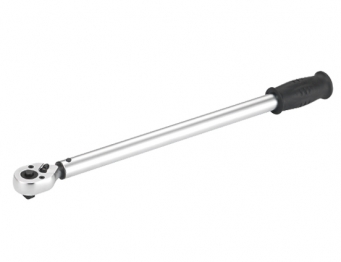
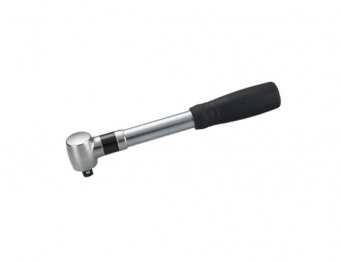
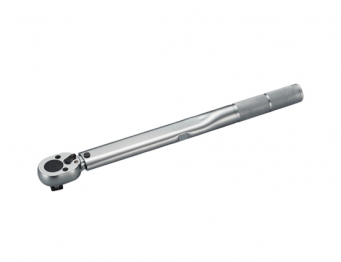
Torque-Tech Precision Co., Ltd. is a Taiwan-based torque tool manufacturer offering OEM/ODM support, torque wrench manufacturing, and calibration-related service for global B2B customers. At Torque-Tech Precision Co., Ltd., we have long focused on torque control solutions backed by manufacturing experience, OEM/ODM capability, and calibration support with an emphasis on quality traceability. For buyers and plant managers evaluating torque tools for repetitive production environments, a Preset Torque Wrench is a solution worth serious consideration when the goal is to reduce fastening variation and improve SOP consistency. You can explore our related Preset Torque Wrench products here:
If you would like to discuss your application requirements further, we also welcome you to contact us.



