
 Video
Video

How Precision Torque Control with Torque Wrenches for EV Assembly
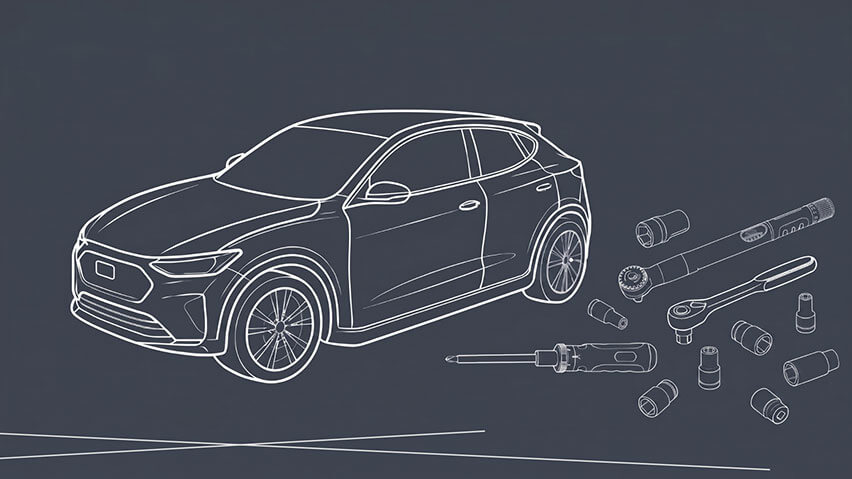
The electric vehicle market is growing quickly, but for manufacturers, growth also brings tighter quality expectations, more complex assemblies, and greater responsibility for safety. In our experience, one of the most underestimated factors in EV manufacturing is torque control. Whether the application involves battery packs, power electronics, chassis systems, or final assembly, fastening precision directly affects performance, traceability, and long-term reliability.
For procurement teams, plant owners, production engineers, and quality managers, the challenge is not simply buying a tool. The more important question is how to build a torque control process that reduces failure risk, supports consistent quality, and scales with EV production demands. That is where the right torque strategy becomes essential.
Why Torque Control Matters in EV Manufacturing
EV production requires precision at multiple critical points. Unlike conventional vehicles, EVs rely heavily on battery modules, high-voltage systems, lightweight structures, and compact electronic assemblies. These components are often sensitive to both under-torque and over-torque.
If torque is too low, fasteners may loosen over time due to vibration, thermal cycling, or repeated load. If torque is too high, threads, housings, seals, and sensitive components may be damaged. In EV manufacturing, either problem can lead to rework, warranty claims, assembly delays, or safety concerns.
From our point of view, precise torque control helps manufacturers achieve five core outcomes:
- More consistent assembly quality
- Lower defect and rework rates
- Better safety and compliance performance
- Improved traceability in quality systems
- Greater confidence during scale-up and OEM production
Common Fastening Pain Points in EV Production Lines
Many EV manufacturers and suppliers face similar issues when reviewing their assembly process.
-
Variation Between Operators
Even with clear work instructions, manual fastening can vary from one operator to another. Without accurate and repeatable torque tools, the same joint may be tightened differently across shifts or production sites.
-
Sensitive Materials and Compact Designs
EV components often combine aluminum housings, lightweight alloys, plastics, and electronic connectors. These materials can be damaged more easily if torque is not tightly controlled.
-
Increasing Quality Documentation Requirements
Automotive and EV supply chains continue to demand stronger proof of process capability, calibration records, and standards compliance. Torque accuracy is no longer just an operational issue; it is also a supplier qualification issue.
-
Multi-Stage Assembly Complexity
Battery systems, electronics, and vehicle structures require different torque ranges and different tool forms. A one-size-fits-all fastening approach usually creates inefficiency and risk.
Where Torque Control Has the Biggest Impact in EV Manufacturing
-
Battery Pack and Module Assembly
Battery enclosures, busbars, brackets, covers, and module fixtures require stable torque values to protect structural integrity and electrical performance. Incorrect torque can affect sealing, contact stability, and service safety.
-
Electric Motor and Drivetrain Assembly
Fastening accuracy in drivetrain-related components supports mechanical stability and long-term durability. Precision matters especially where vibration, thermal load, and repeated operation are expected.
-
Power Electronics and Control Systems
Inverters, converters, and electronic housings often involve compact spaces and delicate fastening conditions. Reliable torque application helps avoid thread damage and component stress.
-
Chassis, Wheel, and Structural Components
Even in the EV era, the fundamentals of vehicle safety remain unchanged: structural joints must be tightened accurately and consistently. This is where a dependable industrial torque solution continues to play an important role in maintenance, inspection, and controlled assembly tasks.
Choosing the Right Torque Tool for EV Applications
Not every EV fastening point requires the same tool. Selecting the right torque solution should depend on torque range, workspace limitations, operator usage, calibration needs, and production volume.
Before the table below, it is important to note that buyers should evaluate tools not only by price, but by total process value: accuracy, durability, calibration support, ergonomics, and compatibility with OEM requirements.
| EV Manufacturing Need | Recommended Tool Type | Why It Matters |
| General controlled fastening on assembly lines | Manual torque wrench | Supports repeatable tightening for standard joints |
| Heavy-duty structural or high-torque applications | Industrial hand torque wrench | Helps maintain accuracy in demanding industrial environments |
| Branded or customized production requirements | OEM torque wrench | Supports private label, custom specification, and project-based development |
| Compact or sensitive component assembly | Low-range precision manual torque tool | Reduces the risk of damage in electronics or smaller fasteners |
| Multi-market compliance and quality-driven sourcing | Calibrated torque wrench with traceability | Strengthens supplier credibility and audit readiness |
For EV manufacturers, the best choice is often not just a catalog product. In many cases, an OEM torque wrench program provides better alignment with handle design, branding, torque range, certification expectations, and target end-user applications.
Why Calibration and Standards Are Critical
In the EV sector, tool accuracy alone is not enough. Buyers increasingly want evidence that the tool supplier can support calibration, traceability, and recognized standards.
A trustworthy torque tool program should be connected to:
- Compliance with DIN ISO 6789 and relevant torque standards
- Documented calibration procedures
- Stable quality management systems
- Traceability for production and after-sales support
These points matter because procurement teams are not only buying a wrench; they are buying process confidence. When a supplier can support calibration and quality documentation, that supplier becomes more valuable in automotive and EV supply chains.
EV Market Trends That Are Raising the Bar
-
More Platform Diversity
Automakers are developing more EV platforms across passenger vehicles, commercial vehicles, micro-mobility, and specialized transportation. This creates demand for broader torque tool configurations.
-
More Lightweight Materials
As EV makers reduce weight to improve energy efficiency, fastening on aluminum and mixed-material assemblies becomes more sensitive. Controlled torque becomes even more important.
-
More Supplier Accountability
Global OEMs increasingly expect their suppliers to demonstrate repeatable quality systems, technical support capability, and scalable production readiness. A professional torque tool supplier can contribute directly to that expectation.
FAQ of Before Sourcing Torque Tools for EV Manufacturing
Q1. Can the supplier support customization for different EV project requirements?
A1: This is often one of the first questions buyers should ask. In EV-related applications, standard products may not always match the required torque range, design preferences, branding needs, or market positioning. If the project involves private labeling or special specifications, it is helpful to work with a supplier that has experience in OEM torque wrench development.
Q2. How important are calibration and traceability when choosing torque tools?
A2: They are extremely important, especially in EV manufacturing environments where fastening accuracy directly affects quality and safety. Buyers should confirm whether the supplier can provide calibration support, testing records, and traceable documentation. This is particularly relevant when sourcing a manual torque wrench for precision assembly work.
Q3. Does the supplier really understand automotive and industrial fastening applications?
A3: Not every tool supplier understands the actual fastening challenges found in EV production. Buyers should look for suppliers with experience in automotive assembly, maintenance environments, structural fastening, and other precision-driven industrial applications. That industry knowledge becomes especially valuable when selecting an industrial hand torque wrench for demanding use conditions.
Q4. Can one supplier cover different torque ranges and application scenarios?
A4: In most EV production environments, the answer should ideally be yes. Different stations may require different torque capacities, tool sizes, and operating formats. A broader product line can help buyers simplify sourcing and improve compatibility across projects. In practice, one application may call for a compact manual torque wrench, while another may require a more heavy-duty industrial solution.
Q5. What quality standards and certifications should buyers review first?
A5: Buyers should review whether the supplier’s products and quality systems align with recognized industry requirements, such as DIN ISO 6789, ASME-related standards, ISO 9001, and other relevant certifications. These are important indicators whether the buyer is evaluating a standard manual torque wrench supplier or a partner for a customized OEM torque wrench project.
Q6. Is the supplier able to support long-term cooperation, not just one-time delivery?
A6: For EV programs, sourcing decisions are rarely short-term. Buyers should consider whether the supplier can support technical communication, sampling, production follow-up, and ongoing quality coordination. This becomes even more important for custom projects or specialized fastening applications where stable communication can reduce risk over time.
Q7. Should buyers evaluate torque tools based only on price?
A7: No. Price matters, but it should never be the only factor. Buyers should also compare accuracy, repeatability, durability, ergonomics, calibration support, and documentation quality. In many EV projects, a lower-priced tool may become the more expensive choice later if it causes rework, downtime, or avoidable quality issues. This applies whether the tool is a manual torque wrench or another controlled fastening solution.
How We Support These Needs at Torque-Tech
At Torque-Tech, we understand that buyers in EV-related industries are not just looking for tools; they are looking for dependable torque control solutions. Our website highlights our experience in OEM/ODM projects, quality management, and in-house calibration capabilities. We provide manual torque wrench solutions for industrial applications, support customized OEM torque wrench projects, and develop industrial hand torque wrench products for demanding use cases across automotive and other precision-driven sectors. Readers who would like to explore relevant solutions can review our OEM torque wrench service and manual torque wrench product range.
Final Thoughts
As EV manufacturing evolves, torque control is becoming a strategic part of quality assurance rather than a basic assembly step. The manufacturers that manage fastening precision well are better positioned to reduce defects, improve consistency, and meet the rising expectations of global customers. If you are evaluating torque tools for EV production, maintenance, or OEM development, we invite you to contact Torque-Tech to discuss your application needs.



