
 Video
Video

From R&D to Mass Production: How We Accelerate ODM Torque Wrench Projects for Global Brands
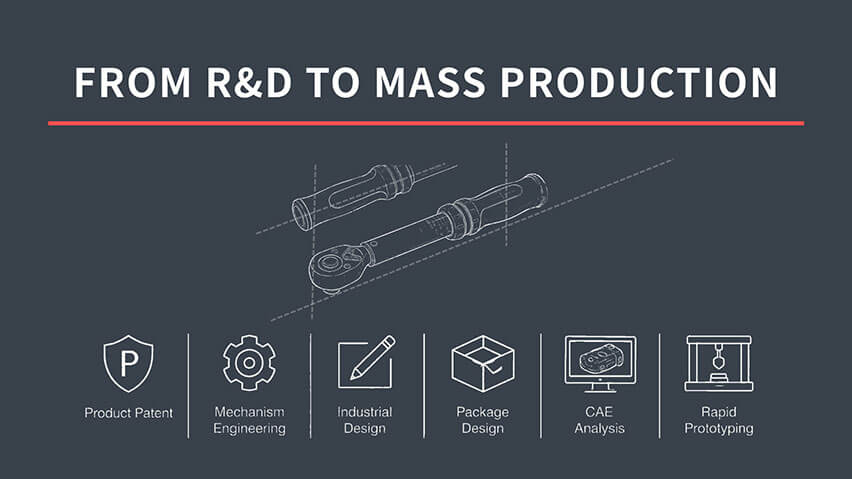
If you are evaluating a torque wrench manufacturer for an ODM project, speed does not come from factory size alone. It comes from how well product development, production planning, quality control, and calibration are connected. At Torque-Tech, we help global buyers shorten the path from R&D to mass production through one coordinated ODM workflow. This improves sample turnaround, reduces approval delays, strengthens quality consistency, and supports customized OEM torque wrench and Preset Torque Wrench programs.
Key Takeaways
- ODM delays often come from poor coordination between development and production.
- We accelerate projects by aligning engineering, manufacturing, quality management, and calibration early.
- This structure helps buyers reduce revision cycles and move into mass production more smoothly.
- Our ODM model is especially suited to customized torque tool programs for global brands.
For procurement teams and brand owners, launching a new torque tool product is rarely delayed by one major mistake. More often, delays come from small disconnects between design, sample validation, production readiness, and quality approval.
That is why an ODM project should not be managed as separate tasks handled by separate parties. It should be managed as one continuous path from concept to commercialization.
At Torque-Tech, we support that path through an integrated ODM service model. Instead of only supplying products, we help customers reduce technical uncertainty, improve execution speed, and enter mass production with greater confidence.
Where ODM Projects Usually Lose Time
Most project delays happen before full production begins. Buyers may have already approved the product direction, but progress slows when teams begin moving from concept into actual execution.
The most common bottlenecks include:
- Product concepts that need redesign after feasibility review
- Sample revisions that take too many rounds
- Weak transfer from prototype stage to production planning
- Misalignment between quality requirements and manufacturing reality
- Delayed approval caused by calibration or traceability gaps
These issues are costly because each delay affects the next stage. A slow sample cycle delays tooling decisions. A weak production handoff delays launch timing. A late quality issue increases rework and uncertainty.
For this reason, the real question is not only whether a supplier can make the product. It is whether that supplier can help the project keep moving.
How We Help Buyers Move Faster from R&D to Mass Production
We accelerate ODM projects by connecting four critical functions from the start:
- Product Development
- Manufacturing Process Control
- Quality Management
- In-House Calibration
This matters because acceleration in ODM is rarely created by one stage alone. It comes from reducing the waiting time, revision time, and approval time between stages.
A significant part of our ODM value comes from early-stage engineering integration and cross-functional coordination. By identifying technical and manufacturing considerations before mass production, we help customers reduce avoidable revisions and support a smoother transition from development to production.
Our ODM Workflow and How It Speeds Up Execution
| Project Stage | What We Support | How It Accelerates the Project |
| Product Development | Mechanism engineering, industrial design, package design, patent search, rapid prototyping | Reduces feasibility risk early |
| Sampling & Validation | Prototype refinement and application review | Shortens revision and approval cycles |
| Manufacturing Process | Controlled production flow from machining to assembly, calibration, packaging, and inspection | Improves transfer into stable production |
| Quality Management | Standards-based quality control and testing | Lowers rework risk before scale-up |
| In-House Calibration | 100% calibration testing and traceability support | Speeds technical approval and buyer confidence |
For buyers developing a Torque Wrench or other specialized torque products, this workflow helps ensure that performance requirements are resolved before scale becomes a problem.
Why Early Engineering Support Has a Direct Impact on Speed
One of the fastest ways to lose time in an ODM project is to discover manufacturability issues too late.
Our development capability includes mechanism engineering, simulation support, industrial design, and rapid prototyping. These capabilities help us evaluate whether a concept can move efficiently into sampling and production, rather than forcing customers into repeated redesign after expectations are already set.
This is where early engineering creates real acceleration:
- fewer avoidable revisions
- faster sample decisions
- better alignment between product design and manufacturing capability
- smoother handoff into production planning
For customized OEM torque wrench development, early clarity often determines whether a project moves steadily or becomes trapped in repeated adjustment.
Why Process Control Helps Shorten the Path to Mass Production
In torque tool manufacturing, stable production depends on more than assembly. It depends on how well each process step supports the next.
Our manufacturing workflow covers key processes including forging, grinding, CNC milling, lathing, drilling, grooving, heat treatment, polishing, sand blasting, plating, laser marking, assembly, calibration, packaging, and final inspection. For buyers, the importance of this process is simple: better process control leads to fewer production surprises. That means fewer disruptions during scaling, fewer inconsistencies between batches, and a more dependable path into volume production.
This is especially important for projects where torque accuracy, durability, and application reliability must remain consistent across orders.
How Quality Management and Calibration Reduce Approval Risk
In many ODM projects, delays do not end with the sample. They continue when quality documentation, calibration evidence, or traceability expectations are not ready for customer review.
That is why quality management and calibration should support project speed, not just final compliance.
Our quality management system is certified to ISO 9001:2015, while applicable torque wrench products are designed and tested in accordance with relevant standards such as DIN ISO 6789 and ASME B107.300-2010.
Torque-Tech operates an in-house calibration laboratory accredited by the Taiwan Accreditation Foundation (TAF), a signatory to the ILAC Mutual Recognition Arrangement (ILAC MRA), under ISO/IEC 17025:2017 accreditation criteria. Our published calibration capability covers torque tools up to 1,500 N·m. We also conduct 100% calibration testing of our torque wrench products using computer-controlled calibration testers.
For buyers, these capabilities help:
- reduce approval delays
- improve traceability confidence
- support technical evaluation
- strengthen consistency claims in the market
For a Torque Wrench, this matters even more because repeatable torque performance is central to product trust.
FAQ: What Buyers Need to Know Before Starting an ODM Torque Tool Project
Most delays happen because product development, sampling, production, and quality review are not aligned early enough.
An integrated supplier reduces handoff delays, shortens revision cycles, and improves coordination from design through mass production.
It helps buyers validate torque accuracy faster, improves traceability, and reduces dependence on outside testing.
Yes. A preset torque wrench can be developed as an OEM or ODM project, with options such as preset torque values, product appearance, branding, packaging, and application-specific requirements, subject to technical feasibility and project specifications.
They should look for engineering support, process control, quality transparency, calibration capability, and reliable scale-up readiness.
What Global Buyers Look for in an ODM Partner
Global B2B buyers increasingly expect suppliers to do more than provide quotations and manufacturing capacity. For customized precision tools, buyers also evaluate whether a supplier can help coordinate technical requirements, quality expectations, and production readiness throughout the project.
In precision tool sourcing, this means more buyers are prioritizing:
- fewer coordination layers
- faster development response
- stronger technical support
- better quality visibility
- smoother scale-up into production
These expectations increase the value of ODM suppliers that can support the complete project process, rather than providing isolated manufacturing services alone.
How Torque-Tech Supports Global Brands
At Torque-Tech, we combine product development capability, manufacturing capability, process control, quality management, and in-house calibration to help customers move more efficiently from concept to commercialization.
With extensive experience across a wide range of torque tool applications, from precision assembly to heavy industry, we understand the different performance and application requirements of each market. This experience enables us to provide practical technical support for customized torque tool development.
If you are evaluating an OEM torque wrench partner and want a supplier that can help reduce project delays, improve execution, and support a reliable transition into mass production, explore our OEM/ODM torque tools service page.
Ready to Move Your ODM Project Forward?
If your team is looking for a torque wrench manufacturer that can support product development, production, quality management, and calibration through one coordinated process, we would be glad to discuss your next project. To explore customized torque tool development or speak with us directly, please contact Torque-Tech.



